The Heath & Hampstead Society fights to preserve the wild and natural state of the Heath; to maintain the character and amenities of Hampstead; and to promote the study of local history, natural history and conservation.
Next Guided Walk
Guided walk of Hampstead's Historic Plaques
Led by Carol Seigel, historian, curator and member of the HHS Plaque Selection Panel
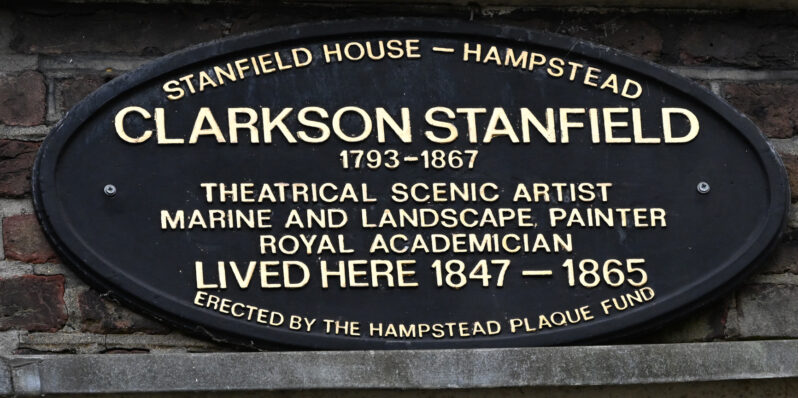
The Society is hosting a second historic plaque walk through and around Hampstead Village to discover where some of its most famous residents lived and worked. They are commemorated by the English Heritage blue plaques and the black oval plaques of the Society, some of which are on Hampstead’s landmark buildings.
The Walk will explore the village from Burgh House down to Downshire Hill, the High Street and the streets around.
The meeting and end points for the walk will be Burgh House, New End Square, NW3 1LT. 10 minutes’ walk from Hampstead Tube Station (for map, see www.burghhouse.org.uk).
The walk will take approximately an hour and a half.
The cost of the walk is £10 per person, which can be paid at the start of the walk in cash or by credit card. To reserve your place(s), please email the Society on events@HeathandHampstead.org.uk
Sir Thomas Beecham, 2nd Baronet CH, was a notable English conductor and impressario best known for his association with the London Philharmonic and the Royal Philharmonic Orchestras.
He was born in St. Helens Lancashire next to the Beecham’s Pills laxative factory which was founded by his grandfather Thomas Beecham. He studied piano from boyhood and began conducting with the amateur St Helens Musical Society.
He was pivotal in the development of professional orchestras in the early twentieth century. He founded three orchestras – the Beecham Symphony Orchestra in 1909, the London Philharmonic Orchestra in 1932 and the Royal Philharmonic in 1946 – and acted as the artistic director of Covent Garden for much of the 1930s. Beecham was a major influence on the musical life of Britain and according to the BBC he was Britain’s first international conductor. He was knighted in 1916.
He produced 120 operas, 60 of them new to this country.
He had a particular penchant for north-west London, living in St Johns Wood for four years, very close to the Abbey Road Studios. He lived in Bellmoor from 1937-41. He was married 3 times: first in 1903, then in 1943 to a pianist 29 years his junior and again in 1959 - she was 27 and he was 80!
He had a formidable personality and was famous for his sharp wit. He died in 1941 and is buried in Limpsfield, Surrey.
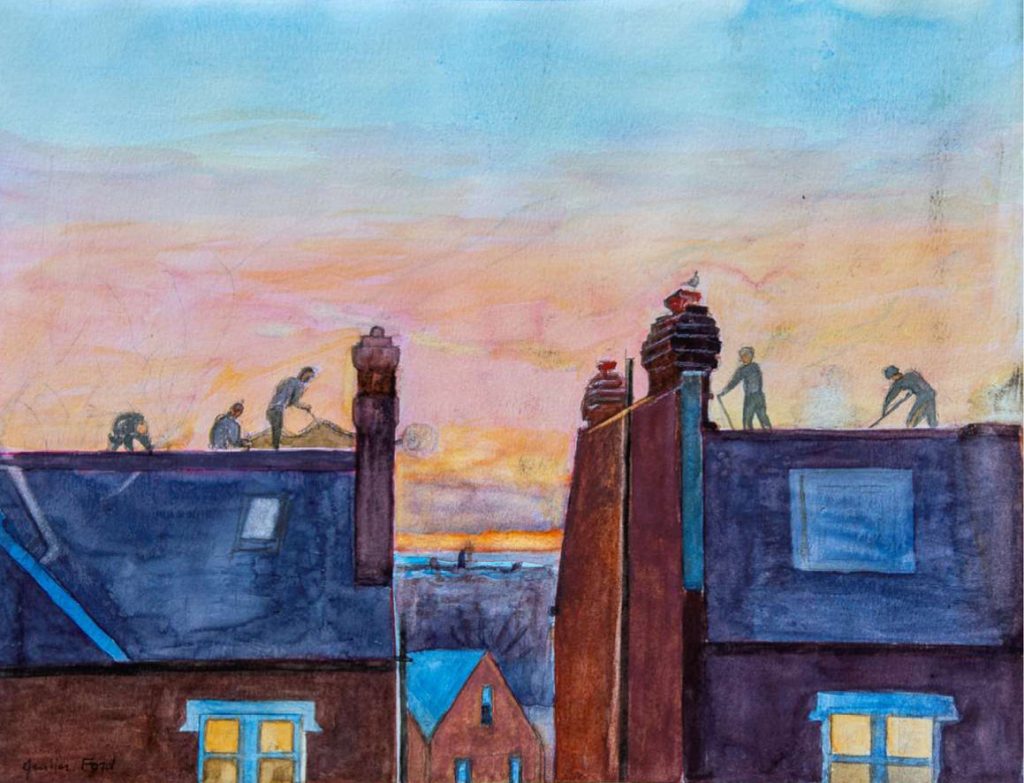
The estate of the late Jenifer Ford, a lifelong member of the Society and Hampstead resident and painter, bequeathed to the Society a collection of her paintings of Hampstead and the Heath.