Conservation & heritage
• City of London – Hampstead Heath The Heath is owned and managed by the City of London Corporation.
• City of London – Hampstead Ponds and Dams
• Burgh House & Hampstead Museum Burgh House is a Grade I listed house built in the early years of the 18th century. The Hampstead Museum is incorporated in the House on the first floor and offers permanent displays on Hampstead history.
• Camden History Society Concerned with the local history (institutions, houses, people and social movements) of the whole London Borough of Camden, including Hampstead, Highgate, Kentish Town, Camden Town and West Hampstead.
• English Heritage exists to protect and promote England’s spectacular historic environment and ensure that its past is researched and understood. English Heritage own Kenwood House.
• Fenton House London’s most enchanting country house and Hampstead’s oldest building.
• The Friends of Kenwood House
• Hampstead Garden Suburb adjacent to the north of the Heath, was founded in 1907 by Dame Henrietta Barnett.
• Hampstead Heath a private website with extensive material about the Heath.
• Hampstead Neighbourhood Forum helping residents to shape development in Hampstead and South End Green.
• Heath Hands is a volunteer organisation created to help conserve the special character of Hampstead Heath and to give everyone who enjoys the Heath an opportunity to make a difference.
• The Highgate Society aims to make Highgate and its neighbourhood a better place in which to live and work; to ensure that any changes made in the environment enhance the amenity of the area; to encourage sound planning and to improve public transport.
• Kenwood House Set in leafy grounds beside Hampstead Heath, this outstanding house was remodelled by Robert Adam between 1764 and 1779.
• Keats House is where John Keats lived from 1818 to 1820 and is the setting which inspired some of Keats’s most memorable poetry. Here, Keats wrote “Ode to a Nightingale”, and fell in love with Fanny Browne, the girl next door.
• Keats Community is a volunteer-run charity at 10 Keats Grove, Hampstead, operated by the community that took over from the Camden Heath Library which was closed in March 2012.
• 2 Willow Road is a unique Modernist home designed by architect Ernὂ Goldfinger in 1939 for himself and his family.
• Tomb with a View The picturesque and historic graveyard of Hampstead parish Church: the last resting place of some of the famous, the infamous, the ordinary and the extraordinary citizens of Hampstead.
• London’s Northern Heights Heritage trails Eleven self-guided trails covering over 850 points of interest available from local retailers or on-line.
Arts & entertainment
• Belsize Park Film Society
• Everyman Cinema Hampstead
• Everyman Cinema Belsize Park
• Hampstead Theatre
• Hampstead Arts Festival
• Pentameters Theatre
Library
Estate Agents
• Amberden Estates
• Anscombe & Ringland
• Benham and Reeves
• Foxtons
• Goldschmidt & Howland
• Hamptons International
• Knight Frank
• Salter Rex
• Savills
• TK International
• Welby (rentals)
Photographs and film
• Matthew Maran The award-winning wildlife photographer of Hampstead Heath and other wild places. He publishes books, calendars and cards. www.matthewmaran.com *
• Britain From Above Aerial photographs 1919-1953
• Camden @Flickr For all your photos of the London Borough of Camden, perhaps the markets, the canal, those punks that sit on the bridge that hate being photographed, or anything else.
• Hampstead Dog Walkies @Flickr Pics of dogs and people walking their dogs up on Hampstead Heath.
• Hampstead Heath @Flickr From Gospel Oak to Golders Green – From Highgate to the Vale of Health.
• Hampstead Heath Shooting Pictures entered in The Heath & Hampstead Society’s 2007 photo competition.
• Heath Life is a film and education programme that aims to celebrate the rich heritage of Hampstead Heath and explore its role and resonance for Londoners today.
Government
• City of London Corporation
• Environment Agency
• London Borough of Camden
• Mayor of London & London Assembly
• Transport for London
Media
• Camden Gazette
• Camden New Journal
• Google Books has books on Hampstead
• Hampstead and Highgate Express
• Hampstead Village Voice A satirical, irreverent and controversial magazine for Hampstead.
Scientific
• Hampstead Scientific Society, founded 1899, looks after the Hampstead observatory.
• London Natural History Society members have two things in common – an interest in nature and a wish to learn more about London’s diverse wildlife.
• London Wildlife Trust is a charity working to conserve and improve the Capital’s natural environment for Londoners.
• The Marylebone Birdwatching Society is based in Hampstead, North London, but attracts members and visitors from all parts of London and beyond.
• NW3 Weather has live and historical weather conditions, as well as a webcam, local forecasts, and weather photography – including the Heath.
• Rupert Sheldrake, one of the world’s most innovative biologists, has revolutionised scientific thinking with his vision of a living, developing universe with its own inherent memory.
Social
• The Heath & Hampstead Society on Facebook
• The Heath & Hampstead Society on Instagram
• The Heath & Hampstead Society on Twitter

Next Guided Walk
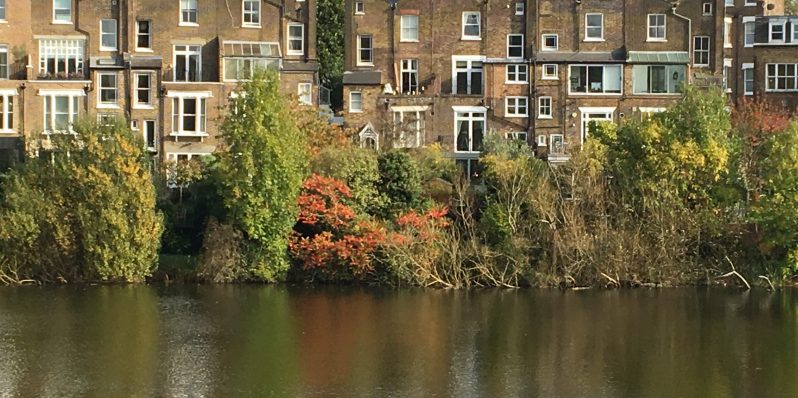
The History of the Hampstead Heath Ponds
The Hampstead Heath ponds - can there be ponds anywhere in the world, more in the news? Find out what makes them so special.
Date: Sun 06 Dec, 2026
Time: 10:00 am
Duration: 2 hours
Meet at: Burgh House
Walk led by: Marc Hutchinson - Chairman of the Heath & Hampstead Society
UPDATE: Urgent Notice: This walk has had to be cancelled due to the indispositiion of the walk leader.
Browse all walks...
Plaques in Hampstead
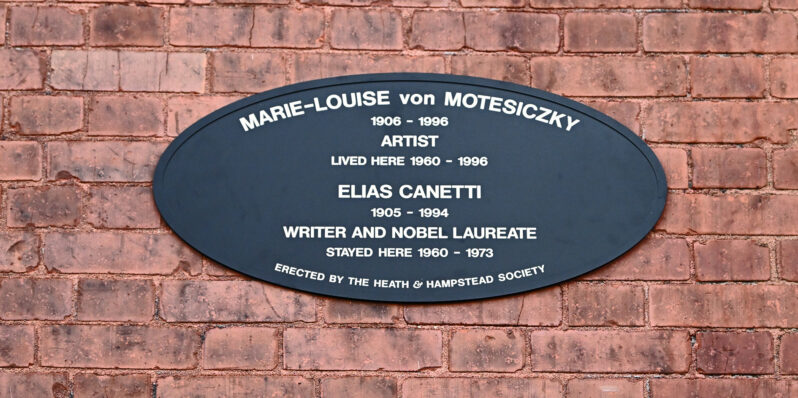
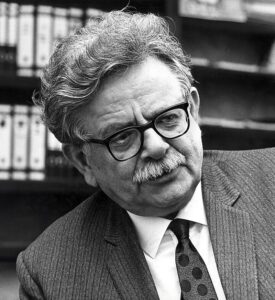 Elias Canetti was born in Bulgaria into a Sephardi Jewish family, and his peripatetic life made him a true cosmopolitan long before he left Vienna in 1938, arriving in Britain later that year, where he became a naturalised subject in 1952. He was already a published author excelling in penetrating, often ironic psychological observation, but largely unknown in Britain where his work was yet to be translated from German into English. The first to appear was his novel Die Blendung (1935), translated by C.V. Wedgwood as Auto-da-Fé (1946).
Canetti was involved with many women, but the relationship with Marie-Louise von Motesiczky was one of the most consistent. Their correspondence across nearly fifty years (now in Tate’s Archive) is testimony to the vital role they played in each other’s lives. He encouraged Marie-Louise as an artist, and she gave him a haven where he could keep his library and write. The most notable outcome of this was one of the works that contributed to his citation for the Nobel Prize for Literature in 1981: Masse und Macht (1960), translated by Carol Stewart as Crowds and Power (1962), a psychological study of the history of human behaviour informed by his direct experience of the inter-War years.
After his second marriage in 1971, Canetti settled in Zurich where he died in 1994. Three volumes of autobiography were published between 1977 and 1985, while the excoriating fragmentary memoir of his initial time in England, Party in the Blitz, that he wrote at the end of his life, was first published in English in 2005, translated by Michael Hofmann with an afterword by Jeremy Adler.